
Designing a modern kitchen today involves far more than just layout and appliance selection. It’s about the relationship between materials, light, and daily movement. The kitchen has become a personal space that’s used for everything: from hosting to working to simply pausing for a quiet moment. The choices made here need to reflect both lifestyle and longevity.
Here are ten modern and luxury kitchen design ideas that bring together contemporary form, subtle luxury, and long-term use rooted in what Truvi offers across its indoor kitchen collections.
1. Laminates for Functional Living
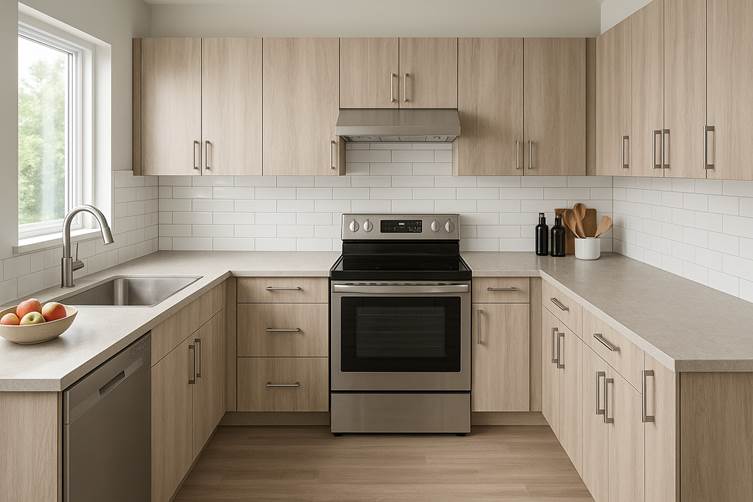
Laminate surfaces are often selected for their reliability and adaptability. In kitchens, this means finishes that are easy to maintain while still offering a well-finished, tailored look.
Truvi’s laminate options come in a variety of textures: soft matte, satin sheen, and woodgrain-inspired visuals. The application is seamless, and the resistance to wear makes it suitable for active households where the kitchen is constantly in use.
Laminate works well in projects where clean geometry is a priority. It integrates into handleless cabinetry systems and works across tall units, drawers, and open shelving without breaking the visual flow.
2. PET for a Consistent Finish
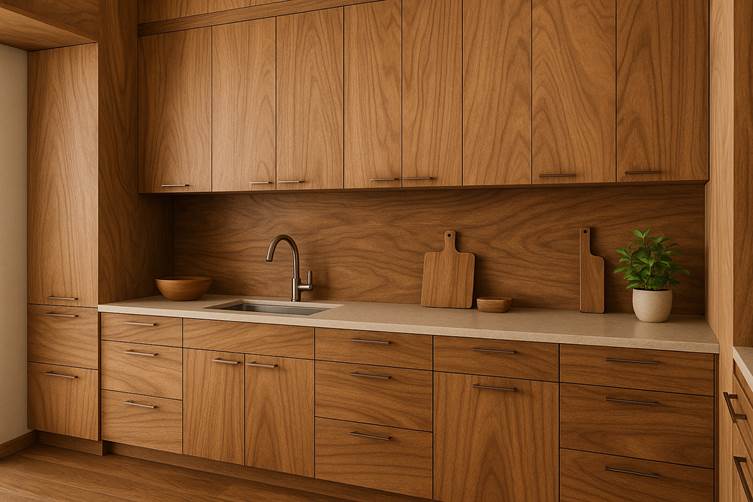
PET, or Polyethylene Terephthalate, is a surface material used in cabinetry where smoothness and uniformity are important. The coating is applied on MDF or engineered boards to provide a continuous, flawless exterior.
What makes PET relevant in modern kitchens is its high resistance to fingerprints, scratches, and discoloration from light exposure.
PET kitchens are available in both high-gloss and matte finishes. The high-gloss versions catch light without distortion, while the matte options reduce reflection and offer a soft, tactile experience. PET is best suited for open-plan kitchens where surfaces are constantly visible and need to maintain a pristine appearance over time.
3. Natural Veneer for Warmth
Natural veneer is created by slicing real wood into thin sheets, allowing its grain and natural texture to be applied to cabinetry surfaces. Each veneer panel has its own character, making it especially appealing to those who prefer organic variation over uniform finishes.
Truvi’s natural veneer kitchens use responsibly sourced wood layers bonded to high-quality substrates. The surfaces are treated for kitchen durability while preserving the warmth and tone of the wood. These kitchens tend to feel more intimate, with depth created by light interacting with real grain rather than a printed texture.
This material suits both indoor kitchens and transitional kitchen styles, especially when paired with stone countertops or brushed metal accents.
4. Rough Cut Veneer for Texture
Rough cut veneer builds on the principle of natural veneer but with more visible texture. The wood layers retain more of their original markings, sometimes including saw-cut traces and raised grain. This adds tactile richness to the cabinetry and gives the kitchen a strong architectural tone.
In Truvi’s collection, rough cut veneers are used on larger vertical surfaces and tall storage panels, sliding doors, and island fronts. These kitchens are not minimalist by nature, but they remain clean and structured.
They work well in homes where material honesty is appreciated and where the kitchen serves both aesthetic and functional purposes.
5. Lacquer for Surface Clarity
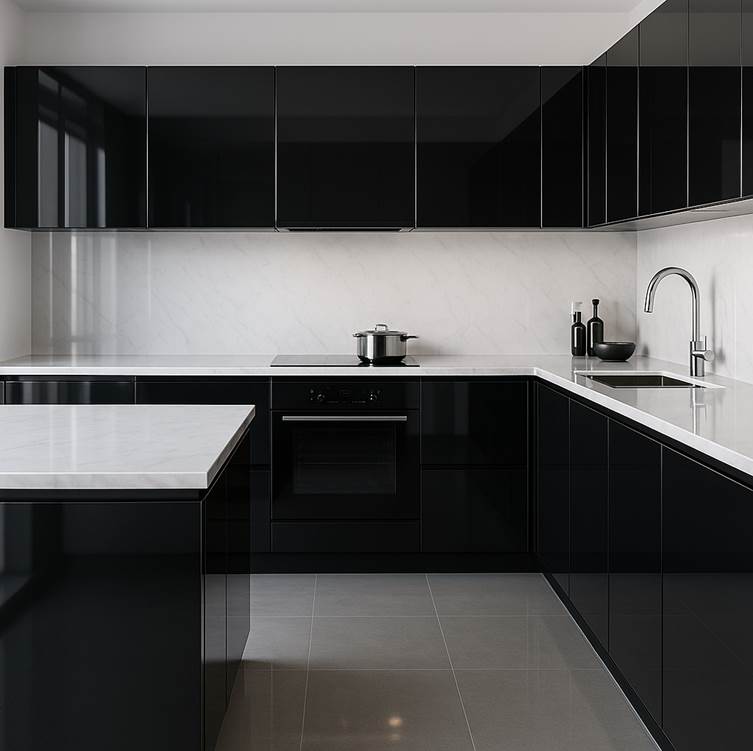
Lacquered kitchens are created by applying multiple layers of color and protective coating to cabinet surfaces, then polishing them to a high level of smoothness. Truvi offers lacquer in both modern and classic tones. The gloss level can range from subtle satin to high-shine finishes, depending on the design goal.
These kitchens suit homeowners who prefer clean surfaces that still offer a bit of visual interest through color depth and light reflection.
Lacquer is especially effective in medium to large kitchens, where its finish can contribute to the spatial atmosphere. It pairs well with metal accents, natural stone, and structured layouts.
6. Glass for Sharp Detailing
Glass kitchen fronts are manufactured by layering glass over colored or textured backings, then mounting them onto cabinetry frames. Truvi’s glass kitchens focus on clarity, clean lines, and uninterrupted surfaces. The material reflects ambient light and gives a sense of weightlessness to even large cabinetry units.
These kitchens are suitable for interiors with a minimalist design direction or spaces where natural light is a key element. The edges and joins in glass cabinetry are highly precise, often achieved through aluminum framing or flush mounting systems. Fingerprint resistance and cleaning ease are considered in the glass selection used.
7. Solid Wood for Longevity
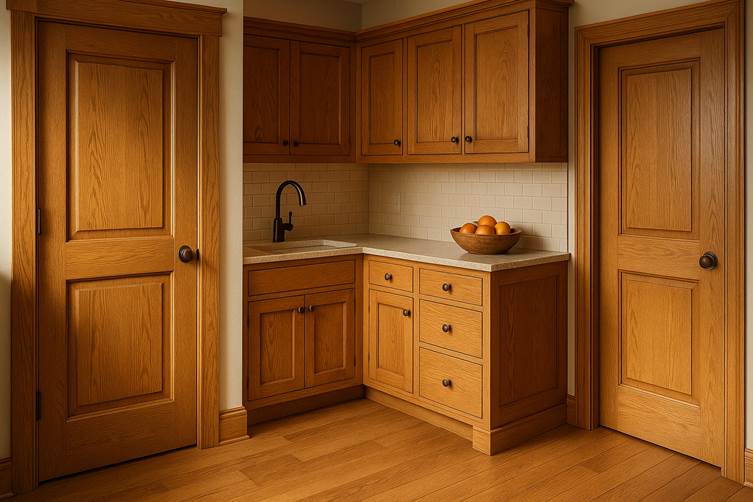
Solid wood cabinetry, unlike veneer, is made from thick timber components that are milled, shaped, and joined for use in kitchens. It has structural weight and durability but also requires expert carpentry and surface treatment. Truvi offers solid wood kitchens crafted with controlled drying processes to reduce movement and improve stability.
This material is ideal for those who value tactile weight and natural aging in their furniture. Over time, the surface may darken, patinate, or develop more contrast, especially near handles or sink areas. It’s best paired with neutral stone or warm metalwork, and works particularly well in homes that integrate traditional craftsmanship with modern layout design.
8. Ceramic for Stone Appeal
Ceramic finishes are engineered for extreme hardness, heat tolerance, and scratch resistance. In Truvi’s kitchens, ceramic is used for cabinetry fronts, countertops, and even integrated sink sections. The surface texture can be polished, matte, or lightly structured depending on the design goal.
Ceramic kitchens are typically selected for projects that prioritize durability and a cool, architectural appearance. The material has a slightly mineral tone, giving it a calm, neutral look that works well with greys, beiges, and natural wood. Its resilience makes it ideal for active kitchens or families that entertain frequently.
9. Hidden Storage and Functional Layers
Modern kitchens place a premium on space optimization without disrupting the visual language of the room. Truvi integrates internal pull-out systems, soft-close hardware, and concealed storage zones behind uninterrupted cabinet faces. These allow for full pantry systems, integrated bins, and even concealed appliance bays.
Storage functionality is not added as an afterthought but built into the cabinetry system from the start. The goal is to allow everything, tools, ingredients, small appliances to have a place, without needing to be visible. This is especially important in kitchens that are visible from living and dining spaces.
10. Combining Finishes for Balance
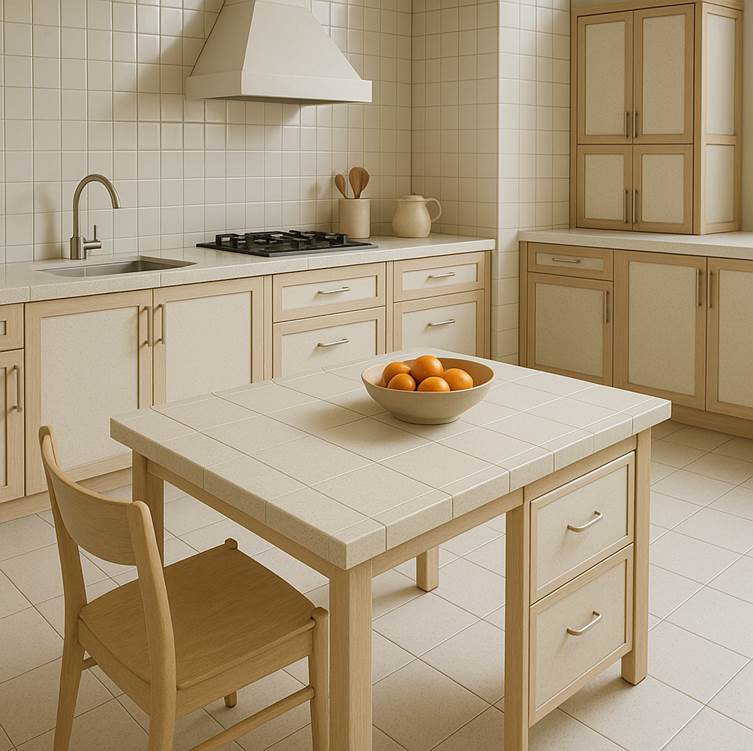
Each material carries its own texture, reflectivity, and tone. In many of Truvi’s kitchens, two or three finishes are combined across different volumes.
For example, a PET finish may be used for base cabinetry, while natural veneer is introduced on tall units or open shelving. This breaks up the space while maintaining cohesion.
The right balance depends on scale, lighting, and user preference. Mixing materials is not about contrast. It’s about building a visual rhythm across the space that responds to how it’s used throughout the day.
Closing Note
Modern kitchens should feel intentional. Every surface, handle, texture, and shadow plays a role in how the space is experienced. Whether it’s the quiet touch of PET, the grounding texture of rough veneer, or the visual lightness of glass these decisions define how the space functions and how it feels to live in.
At Truvi, each kitchen is designed to respond to real life, not just trends. Every material is selected for a reason. And every finish offers something that goes beyond appearance because at this level, design is never just visual.
Get in touch with us now to elevate your kitchen.

